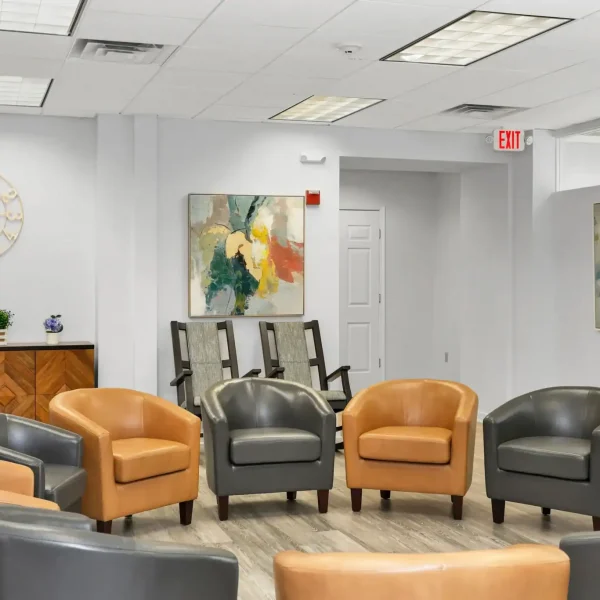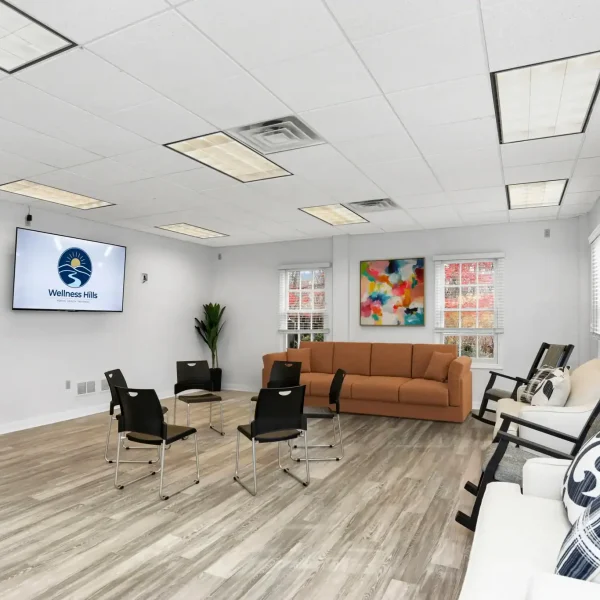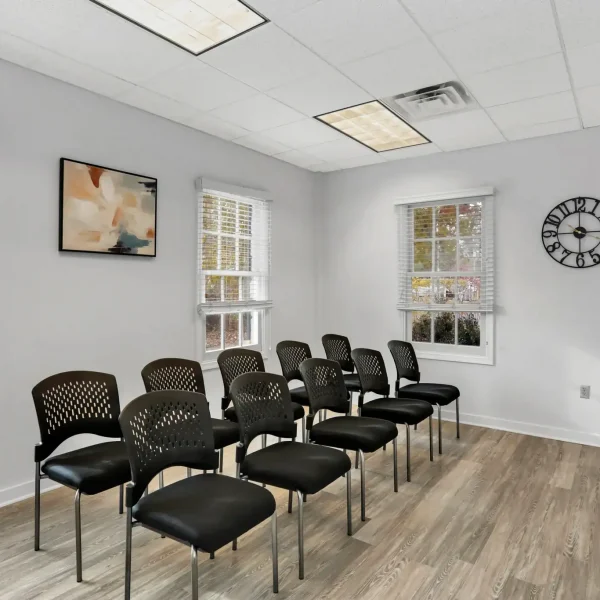

Wellness Hills provides grief and loss therapy for adults across New Jersey from our Chester location, with PHP, IOP, and outpatient care matched to clinical need.
Grief is a structured biological and psychological response to significant loss. When the intensity of bereavement leads to persistent functional impairment, clinical intervention is necessary to move from acute distress to integration.
At Wellness Hills in Chester, New Jersey, we provide grief and loss therapy through evidence-based protocols delivered across multiple levels of care, based on safety, symptom severity, and daily functioning.
Facility Credential: Wellness Hills Mental Health Treatment is licensed by the New Jersey Department of Health (License No. 70290104).


Grief impacts the nervous system and cognitive processing. It is a full-body event.
Grief impacts whole-body functioning. While often described in waves, clinical grief can manifest as a series of measurable symptoms, as defined by the DSM-5-TR:
Loss is not limited to the death of a person. Any major life rupture can cause bereavement responses. Our team treats various forms of loss.




Standard mourning follows a fluctuating path toward adaptation. Clinical grief stays static and intense.
In typical grief, painful emotions come in waves. They are often tied to reminders and gradually become integrated as a person adapts to a new reality.
Prolonged Grief Disorder is characterized by a persistent, intense preoccupation with the deceased and the circumstances of the death, accompanied by severe emotional pain (e.g., intense yearning, identity disruption) and significant functional impairment that remains largely unchanged over an extended period.
A clinician can assess for this distinction based on the duration, intensity, and life impact of symptoms.
Grief rarely exists in a vacuum. It often mimics major depressive disorder or generalized anxiety. Identifying the primary condition is vital for the correct treatment plan.
We also monitor substance use risk. People often use alcohol or drugs to numb grief. A clinical assessment finds the root cause of these behaviors.
Certain signs indicate a crisis. Your physical safety is the highest priority.
Seek help if you cannot keep yourself safe.
If you are in immediate danger, call 911. If you are having thoughts of self-harm, call/text 988.
New Jersey offers immediate help through the 988 lifeline. You can also go to the nearest hospital emergency room. These services are available at any time.

Find out your personal coverage & options for treatment with a free verification of benefits from our admissions team. Whether you come to our programs or not we will ensure that you receive personalized recommendations for treatment based on your needs.






We use a Clinical Decision Pathway to move patients from avoidance to integration.
Our protocol focuses on reducing functional impairment. We use grief-focused, aka bereavement therapy to process memories safely. The goal is to lower the distress associated with the loss.
Sessions include structured routines and pacing. You will face reminders of the loss without becoming overwhelmed.
These approaches may be combined based on clinical need; see our full list of therapy approaches.
Medications do not fix grief. They treat co-occurring depression, anxiety, or sleep disorders. Paula Weisman, PMHNP-BC, provides evaluations for these needs. We only use medication when it is clinically indicated. Care is always coordinated with your primary therapist to ensure safety. If you’re experiencing overlapping symptoms, view all the conditions we treat.





Average 5.0 Rating
"I felt supported, understood, and never judged. The therapists here actually listen, and the groups helped me build confidence and skills I didn’t even know I needed. I’m healthier, calmer, and finally hopeful about my future. I’m so grateful for the care I received.”
Client Satisfaction


We offer three distinct levels of treatment based on your symptom severity.
Available levels of care: Partial Hospitalization (PHP), Intensive Outpatient (IOP), and Outpatient Therapy (OP).
Each level combines structured therapy, individualized treatment planning, and (when clinically indicated) psychiatric care, so support matches the severity of symptoms and safety needs.
Safety and daily needs guide the choice in grief counselling or prolonged grief disorder treatment. Leigh Rasmussen, LPC, LCADC, and our clinical team evaluate safety, symptom intensity, and environmental stability to determine if a patient requires the structure of a grief therapy PHP or other levels of care.
Recovery is not a return to a pre-loss state. It is the ability to carry the loss while living fully after undergoing our grief and loss therapy in NJ.
Together, these supports form a stable care structure, especially for offering quality complicated grief therapy services.
Treatment progress follows a measurable path.




Wellness Hills tries to reduce financial barriers to clinically necessary care by providing clear guidance and assisting with insurance verification.
Most major health insurance plans provide benefits for mental health treatment. It includes coverage for grief therapy, especially PHP and IOP programs. Wellness Hills Mental Health accepts several major health insurance providers for mental health services, including Aetna, Cigna, UnitedHealthcare (Optum), Horizon Blue Cross Blue Shield of New Jersey, and AmeriHealth. However, coverage specifics vary significantly by plan. Our team can help verify insurance benefits, including:
The journey begins with a comprehensive 60-90-minute biopsychosocial assessment conducted by a licensed clinician. This evaluation includes:
Following this assessment, our clinical team will discuss the recommended level of care (PHP, IOP, or OP). The client will then be matched with a primary therapist and given a clear start date and program schedule, often within 24-48 hours.
Wellness Hills Mental Health is a state-licensed facility in New Jersey, operating in full compliance with the NJ Department of Health (DOH) and the Division of Mental Health and Addiction Services (DMHAS).
Our programs align with the clinical guidelines established by SAMHSA, and we are accredited by The Joint Commission and follow evidence-based clinical standards for behavioral health care.
Wellness Hills uses coordinated clinical oversight. Executive Director Michael Levy leads operations and monitors safety, ethics, and staff practice. The team, comprising LPCs, LACs, and PMHNPs, meets daily for clinical rounds. This means that the patient’s primary therapist and their psychiatric provider are in constant communication regarding your progress.
This multidisciplinary team helps ensure continuity of care as clients transition between levels of intensity.
We use measurement-based care. We track your symptoms weekly.
We review results in clinical rounds and in your individual sessions to identify what’s improving, what’s stuck, and whether the level of care still matches your needs.
If scores indicate elevated risk, we complete a same-day safety assessment and adjust the treatment plan.

These FAQs cover the grief-and-loss questions our clinicians and admissions team hear most often, so you know what to expect before reaching out.
Normal grief ebbs and flows. Prolonged grief impairs life long term. Indicators of clinical grief can include the inability to re-engage with life after a significant period (typically 12 months) and persistent yearning that impairs daily functioning. A clinician can assess patterns.
Treatment uses individual sessions. Expect treatment to include group and family work combined with therapies like CBT and DBT to build coping skills. Holistic therapy options (like mindfulness, yoga, nutrition education, meditation, and relaxation techniques) add balance.
Medication addresses depression, anxiety, or sleep disturbances, not grief itself. Used only when clinically indicated.
While many complete primary goals within 12–20 weeks, the clinical duration is determined by your ability to meet behavioral milestones, such as reduced avoidance and improved ADLs.
Coordinated care addresses all conditions simultaneously, integrating therapy and psychiatry.
Call 855-560-5523 today. Begin the intake process with a private clinical evaluation. We determine the appropriate level of care (PHP, IOP, or OP) based on objective clinical data.
Schedule a Confidential Assessment: Call our admissions team to start the intake process. Calls are confidential, and support is available 24/7 to help you take the next step.
Call 911 for immediate danger. Call or text 988 for crisis support.
American Psychiatric Association (APA) – Prolonged Grief Disorder: Clinical overview of prolonged grief disorder, including diagnostic criteria and how it differs from typical grief.
Aetna – Health Insurance Information: Insurance carrier resource for benefits, coverage basics, and member tools for understanding plan details.
New Jersey Department of Health (NJDOH) – Licensing & Health Regulations: Official NJ public health authority with licensing and regulatory information and state-level guidance.
SAMHSA – Laws, Regulations & Policies: Federal behavioral health authority outlining key laws, regulations, and policy frameworks related to mental health and substance use services.