
Wellness Hills provides clinician-led individual therapy in New Jersey within outpatient, IOP, and PHP levels of care.
Individual therapy is a one-on-one clinician-led mental health treatment, not coaching. Wellness Hills specializes in individual therapy for moderate to severe symptoms for adults experiencing functional impairment. We provide individual therapy within Outpatient (OP), Intensive Outpatient (IOP), and Partial Hospitalization (PHP) levels of care. Clinical assessment helps determine the appropriate level of care for a client.
If you are unsure which level fits your needs, you can schedule a confidential assessment to clarify options and begin support safely. We start with an intake and biopsychosocial evaluation to understand symptoms, safety, support system, past treatment response, and functional impairment.

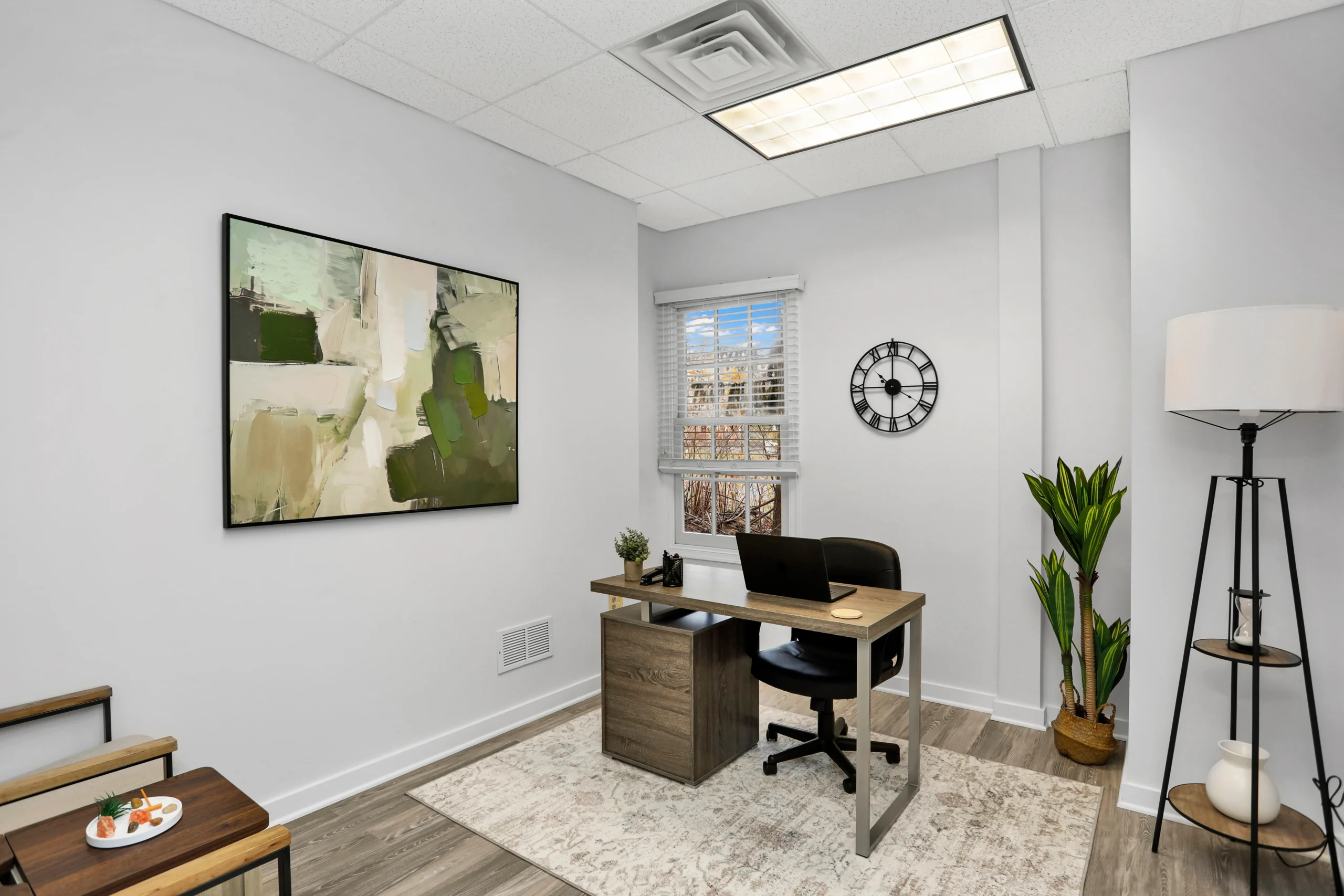
Individual therapy is a confidential way to get help with feelings and life problems by talking one-on-one with a licensed mental health professional. At Wellness Hills, sessions are generally tailored to match the individual’s specific goals, symptoms, and what they need to function better day-to-day.
Most sessions follow a simple pattern: we check what changed since the last session, pick one priority that matters for symptoms and functioning, work on it using skills or structured processing, and leave with a clear next step.
Note: The way therapy is structured can change significantly depending on the client’s needs, the therapist’s approach, and the type of therapy being used.
The common goals of individual therapy can include:
Therapists maintain privacy in accordance with the Health Insurance Portability and Accountability Act (HIPAA). Confidentiality is a standard in individual mental health therapy, as it creates the safety needed for a patient to disclose symptoms without fear of external disclosure. Although in therapy, everything you share is private, privacy has limits. Therapists must report specific things to keep everyone safe, including:
Your therapist will explain these rules when you start. They only share the necessary information in these rare cases.
Not sure what level of care fits? Start with a confidential assessment.



People searching for one-on-one therapy services in NJ often indicate the specific type of support they are seeking. It can help with a range of mental health conditions (like anxiety, depression, trauma, PTSD, and eating disorders) and life challenges (grief, stress, relationship issues, career changes, and addiction).
Most clients come to individual therapy to learn:
Some people have more than one problem at the same time.
During assessment, we look at the full clinical picture (mental health symptoms, substance use, trauma history, and safety). Treatment is planned to address what’s maintaining symptoms, not just what’s easiest to label.
When deciding where a patient fits, the focus is squarely on clinical evaluations of safety and the extent to which the condition is impacting their ability to function. If regular outpatient therapy isn’t enough to support the patient, they’ll suggest a more intensive level of care.
A patient may require PHP or IOP if they experience:
At Wellness Hills, we prioritize everyone’s safety. We achieve this through careful, measured clinical oversight. Our diverse team, including professionals like Leigh Rasmussen, LPC, LCADC, uses standard tools, such as the C-SSRS, to identify early warning signs. This can range from thoughts of self-harm to signs of psychosis. If a crisis arises, we activate our clinical stabilization process.
This is a structured approach focused on quickly helping individuals feel calm and regulated, and on creating a Collaborative Safety Plan together. If safety risk increases or functioning declines, the care plan is adjusted, often by increasing structure and frequency through IOP or PHP.
What to do in an emergency:


Find out your personal coverage & options for treatment with a free verification of benefits from our admissions team. Whether you come to our programs or not we will ensure that you receive personalized recommendations for treatment based on your needs.






We use scientifically tested, research-backed treatment approaches specifically tailored to each person’s goals.
In individual therapy, CBT can be effective for and widely used to treat numerous disorders, focusing on the association between an individual’s thoughts, emotions, and behaviors, including depression (Major Depressive Disorder, MDD) and anxiety disorders.
This teaches skills like mindfulness and how to handle very painful feelings without getting overwhelmed. The goal is to move the person from behavioral dyscontrol to behavioral control and build a life worth living.
Trauma-informed individual therapy is a therapeutic framework that shifts the clinical focus from “What is wrong with you?” to “What happened to you?” It prioritizes physical and emotional safety, recognizes the widespread impact of trauma on the brain and body, and seeks to actively avoid re-traumatization. A licensed therapist helps an individual learn grounding and slow breathing to stay calm. A client may learn to notice physical sensations or use mindfulness to stay in the present and handle daily life without feeling overwhelmed.
Acceptance and Commitment Therapy (ACT) can help people manage difficult feelings and focus on what is important to them.
Sometimes, medication is used alongside talk therapy. When indicated, PMHNPs coordinate with the primary therapist to integrate pharmacologic intervention.
Here is what it may look like:





Average 5.0 Rating
"I felt supported, understood, and never judged. The therapists here actually listen, and the groups helped me build confidence and skills I didn’t even know I needed. I’m healthier, calmer, and finally hopeful about my future. I’m so grateful for the care I received.”
Client Satisfaction


Wellness Hills provides individual therapy across several leveles of care. Placement follows a formal evaluation of symptom severity and functional needs.
Partial Hospitalization (PHP) is a more intensive mental health daytime program that provides highly monitored care, similar to what you’d find in an inpatient setting, but with the key benefit that patients can head home each evening. This type of program can be a good fit for helping people stabilize their acute symptoms and handle crises, all without requiring a constant, 24/7 stay in a clinic.
Intensive Outpatient Programs (IOP) provide a higher level of care than traditional weekly outpatient therapy but are less restrictive than inpatient or residential treatment. IOP is often used in two primary ways:
A typical outpatient individual therapy in NJ typically offers flexible, one-on-one support for managing symptoms, developing coping skills (such as relaxation or cognitive restructuring), processing trauma, improving relationships, and building emotional resilience, all while you maintain your daily life. It can be ideal for those needing help but not 24/7 care, providing personalized strategies to integrate healthier behaviors into everyday living.
Care is often delivered via a multidisciplinary approach to ensure safety and adaptability:
Individual therapy differs from some of our other evidence-based therapies in many ways.
Individual therapy is more privacy-oriented, focusing on issues that would not be addressed in group therapy, where patients strive toward normalization. Both types are preferred in therapy.
Individual therapy focuses on personal regulation and goals for the patient, while family therapy focuses on the relationship system.
Individual therapy often is a means to behavior modification, skill attainment, or psychological root causes leading to mental illness. Medical management visits are intended to alleviate severe symptoms to the point where the individual can function more effectively and thus be more receptive to therapeutic interventions, such as talk therapy.
Many wonder, “Does insurance cover individual therapy”? Under NJ and federal mental health parity laws, insurers cannot treat mental health benefits less favorably than medical or surgical benefits.
Our admissions team can help you verify your specific benefits for free.
Wellness Hills provides transparent guidance to patients using out-of-network benefits or private-pay options to reduce financial uncertainty.
It varies depending on factors such as the specific issues someone is dealing with, how serious those issues are, how well they’re progressing toward their goals, and their ability to reach certain functional steps along the way.
We use standardized symptom measures (such as PHQ-9 for depression, GAD-7 for anxiety, and PCL-5 for trauma symptoms when clinically appropriate) to track change over time and guide treatment adjustments.
Your therapist reviews scores to track whether your symptoms are improving over time or whether care intensity should change.
What progress often looks like (beyond a score):
Progress isn’t only feeling better. It often shows up as sleeping more consistently, fewer missed work and school days, less avoidance, fewer panic spirals, improved conflict tolerance in relationships, and shorter recovery time after stress.

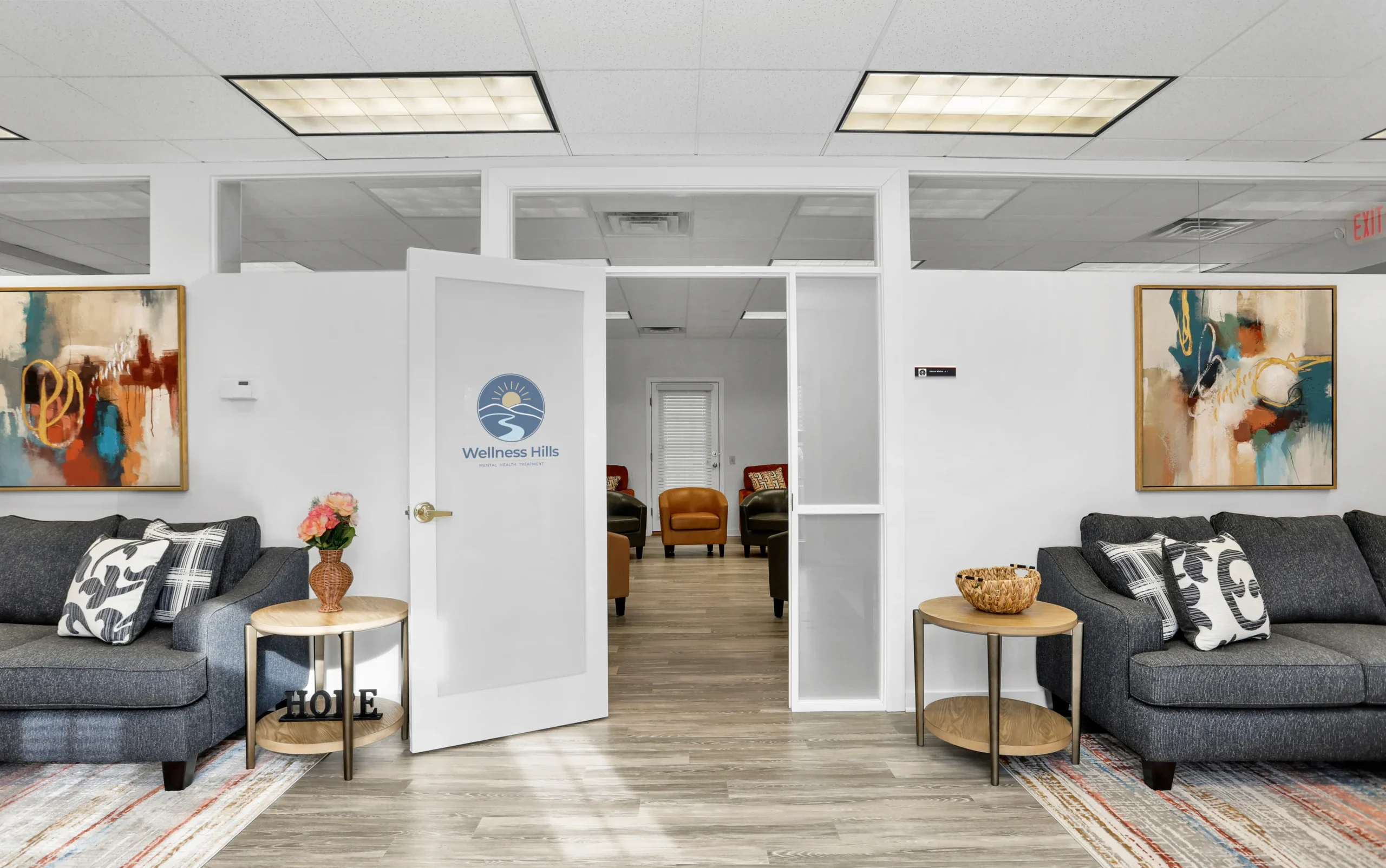

Wellness Hills Mental Health Treatment, located in Chester, New Jersey, is licensed by the New Jersey Department of Health (License No. 70290104) and is accredited by The Joint Commission.
Our guidelines for providing care that’s sensitive to trauma are built around six key ideas: Safety, Trustworthiness & Transparency, Peer Support, Collaboration & Mutuality, Empowerment & Choice, and Cultural Humility. We use these principles to make sure we don’t accidentally cause more trauma by changing our approach from asking “What’s wrong with you?” to “What happened to you?”
We do this through:
Clinicians, including Leigh Rasmussen, LPC, LCADC, and Abby Goodrich, LAC, lead treatment. Daily clinical rounds ensure that the patient’s multidisciplinary team remains in constant communication.
Admissions staff, including Rachael La Ponte and Brittany Robertson, facilitate rapid insurance verification and placement for New Jersey residents.
Contact our admissions team if you are searching for:
While everyone’s path is unique and progress isn’t always linear, these milestones serve as a helpful general guide.
The initial call and assessment process involves two main components: an intake call and a biopsychosocial evaluation were we’ll ask what symptoms you’re dealing with, how they’re impacting work, school or relationships, what you’ve tried before (therapy, meds, prior programs), and whether there are any current safety concerns Clinicians review symptoms, safety, and support systems to recommend a level of care.
Patients should provide a current medication list, insurance details, and any prior treatment records to assist in the placement recommendation.


These FAQs address the most common questions about individual therapy we hear during pre-admission screenings and intake assessments.
Yes. A substantial body of research supports the efficacy of individual therapy as treatment for anxiety and depression.
Weekly outpatient therapy may be enough when symptoms are manageable and safety is stable. IOP or PHP may be appropriate when functioning is severely impaired, crises are recurring, and outpatient therapy hasn’t produced progress.
Sessions remain private. NJ clinicians must follow HIPAA and state laws (N.J.A.C. 13:34-18.5). However, reporting is legally required if there is a clear and present danger to the client or others, or suspected abuse of children, the elderly, or disabled individuals.
Yes, trauma-informed therapy typically starts with stabilization skills (grounding, distress tolerance, sleep regulation, emotional regulation) before deeper trauma processing. The pace depends on safety, symptom severity, and readiness
If progress stalls or symptoms worsen, your plan should change. This may include adjusting the therapy approach (CBT vs DBT skills vs trauma stabilization), increasing session frequency, or adding medication support when indicated
Combining medication with therapy is a standard integrated approach. Providers are expected to coordinate care to ensure psychiatric and therapeutic goals align.
Yes. Most NJ health plans are required to cover mental health services under parity laws.
Therapy is not one size fits all. Outpatient therapy often lasts several months, while higher levels like IOP typically span 21–50 days, depending on individual progress markers.
U.S. Department of Health & Human Services | HIPAA Privacy Rule – Laws & Regulations – Official HHS page outlining HIPAA privacy laws and regulations, used to support confidentiality