
Motivational Interviewing (MI) at Wellness Hills is a structured, clinician-led approach used within our PHP and IOP to reduce ambivalence and improve follow-through.
Many individuals find themselves in a place where change feels necessary yet difficult to pursue. Wellness Hills Mental Health in Chester, NJ, integrates motivational interviewing (MI) within its treatment programs to improve engagement and address the natural ambivalence that may come with major depressive disorders, anxiety, and other DSM-5–defined conditions.
At Wellness Hills, MI, it is not offered as a standalone therapy. It is a structured engagement protocol embedded into PHP, IOP, and outpatient care. We use MI to reduce early drop-out risk, strengthen follow-through, and help patients transition into skills-based work (CBT, DBT, and ACT) once readiness is stable.
Motivational interviewing is a type of talk therapy designed to help when you feel stuck between two choices. It can help you determine whether you are truly ready to make a change.
In MI, the interviewer acts like a guide who helps people get unstuck and move toward a better life.
The OARS Tools
The interviewer uses four main tools to help you keep moving forward:
The Four Steps (How the Journey Goes)
The interviewer and the client move through these four stages together:
The Spirit of the Work (The Mindset)
For this to work, the interviewer follows four main values:
Wellness Hills may use motivational interviewing when a client demonstrates ambivalence or a lack of readiness to change their behavior, as a preparatory step before moving to more directive, evidence-based therapies, such as cognitive-behavioral therapy (CBT).
We may move to behavioral skills-based therapy when there is:
The whole point is to help you talk yourself into changing. In treatment, MI aims to:
Clinicians may use tools such as the confidence ruler or importance ruler to gauge motivation and identify barriers. Change is framed as a process, not a pass/fail test.
MI is usually just one part of a bigger plan. A therapist may combine it with:



Ambivalence is the coexistence of opposing feelings or desires toward a single goal. It is a natural human response to change, not a sign of failure or lack of willpower.
Within the framework of motivational interviewing, being of two minds is considered an expected part of the growth process. MI is specifically designed for individuals experiencing this internal tug-of-war, providing a non-judgmental space to explore conflicting emotions without pressure.
Sometimes, a person’s mental health struggle is so intense that they cannot focus on a talk-based therapy like MI. This can happen if they have:
What Happens Instead?
In these cases, doctors and therapists will usually combine MI with other, more structured types of help. This often takes place in special programs, like a:
Immediate evaluation is necessary if symptoms include:
If you are in immediate danger, call 911. If you are having thoughts of self-harm, call or text 988. For urgent mental health concerns outside scheduled sessions, visit the nearest ER or seek urgent psychiatric evaluation.
Higher-acuity recommendations during screening (as opposed to proceeding with standard motivational interviewing) may be made when factors suggest a patient needs more immediate, directive, or specialized intervention due to the severity or urgency of their condition, safety concerns, and lack of readiness for a collaborative behavior change approach.


Find out your personal coverage & options for treatment with a free verification of benefits from our admissions team. Whether you come to our programs or not we will ensure that you receive personalized recommendations for treatment based on your needs.






In our Chester programs, some patients struggling with ADHD-related burnout respond best to MI when focused on ‘Autonomy Support’ during the first 14 days of PHP. Individual response varies, and treatment planning depends on assessment, safety, and clinical need.
How MI is applied for different clinical patterns (examples):
Depression + low energy/anhedonia: MI focuses on values-based micro-commitments (small actions) when motivation is low, then transitions to behavioral activation and CBT skills once follow-through improves.
Anxiety + avoidance: MI targets the short-term relief loop (avoid → feel better → avoidance grows) to build willingness for exposure-based work when appropriate.
OCD patterns (reassurance/rituals): MI is used to clarify goals and strengthen willingness to tolerate uncertainty before ERP-style steps are introduced (when clinically indicated).
ADHD + burnout/executive strain: MI focuses on autonomy support, friction-reduction, and realistic planning (task initiation supports) before adding structured skills and routines.
Motivational interviewing can help when you:
The Main Tools Used:
Motivational Interviewing (MI) may also be used to help people work through co-occurring disorders, including:




Average 5.0 Rating
"I felt supported, understood, and never judged. The therapists here actually listen, and the groups helped me build confidence and skills I didn’t even know I needed. I’m healthier, calmer, and finally hopeful about my future. I’m so grateful for the care I received.”
Client Satisfaction


What your first MI-informed session typically includes:
What you leave with: a short plan for the week and a simple tracking target (for example: attendance, avoidance moments, medication follow-through questions to bring back, or one specific behavioral goal).
Our clinicians, like Abby Goodrich, LAC, are trained in guiding the conversation so you are the one arguing for change, not them. They make the plan feel personal and manageable.
Change talk is when you say things that insinuate you are ready for change. Sustain talk is when you give reasons to keep things exactly as they are. Both feelings are normal. Clinicians respond with:
The goal is to elicit intrinsic motivation while respecting hesitation.
Tools like CBT, DBT, and ACT provide concrete strategies to manage your thoughts, feelings, and actions.
When you start treatment, a trained professional, such as Leigh Rasmussen, LPC, LCADC, at Wellness Hills, will meet with you to determine exactly how much help you need. Think of this as a check-up for your mental health and safety to make sure you get the right care for your specific situation.
What They May Look At
Based on what you need, Leigh Rasmussen and her team might suggest one of these options below:
In Partial Hospitalization (where you come to the clinic for most of the day for intense support, but you still go home in the evening), our therapists may intentionally deploy MI when motivation is the bottleneck, not insight or access to care.
The therapists at Wellness hills may emphasize MI early in care when ambivalence or follow-through is the main barrier, and then transition into more skills-based work as readiness stabilizes.
Intensive outpatient care involves attending several hours of treatment per week, but it is flexible enough to accommodate work or school. At Wellness Hills, we may use MI to help patients navigate high-risk social situations, aiming to elicit internal change talk.
We use MI to strengthen follow-through by linking daily choices to the patient’s values, identifying barriers, and building realistic, measurable next steps.
These are regular weekly therapy sessions. Common issues that can lead us to employ MI include when a client is ambivalent about continuing medications for chronic mental or physical health conditions or for lifestyle maintenance, or when a client needs help integrating new, healthy habits (like exercise or nutrition) into their daily life after the structure of higher-level programs is gone.
MI is about getting you ready and committed to making a change. Cognitive Behavioral Therapy (CBT) is about teaching you practical ways to change how you think and act.
MI helps strengthen readiness and follow-through when motivation is the barrier. Dialectical Behavior Therapy (DBT) teaches structured skills for emotion regulation, distress tolerance, interpersonal effectiveness, and mindfulness.
MI can help you stop feeling stuck between wanting to change your life for the better and wanting to stay the same. Acceptance and Commitment Therapy (ACT) can help you take action aligned with what you value most in life, while learning to accept the challenging thoughts and feelings that may arise along the way.
A randomized controlled trial involving Latino adults receiving care for depressive disorders found that a brief Motivational Interviewing–based intervention improved antidepressant adherence compared with usual care.
A systematic review and meta-analysis also found that Motivational Interviewing was associated with improved medication adherence across studies, though results varied by condition and study design.
At Wellness Hills, we use MI most often during your first one to three weeks in our programs. This is the time when people are most likely to feel like quitting, and we want to help you stay on track. In our programs, we see retention stabilize once these and other things occur:
Our team will use simple tools (like asking you to rate how ready or confident you feel on a scale of 1 to 10) to see how you are doing. Once you feel steady and are showing up regularly, we move into other types of therapy (like CBT or DBT) to give you even more skills for your recovery.
MI is the engine of change, but not the toolbox itself.
When change talk doesn’t increase by week 2-3 (e.g., persistent high resistance, sustained talk favoring the status quo, or no progress in resolving ambivalence), we may:
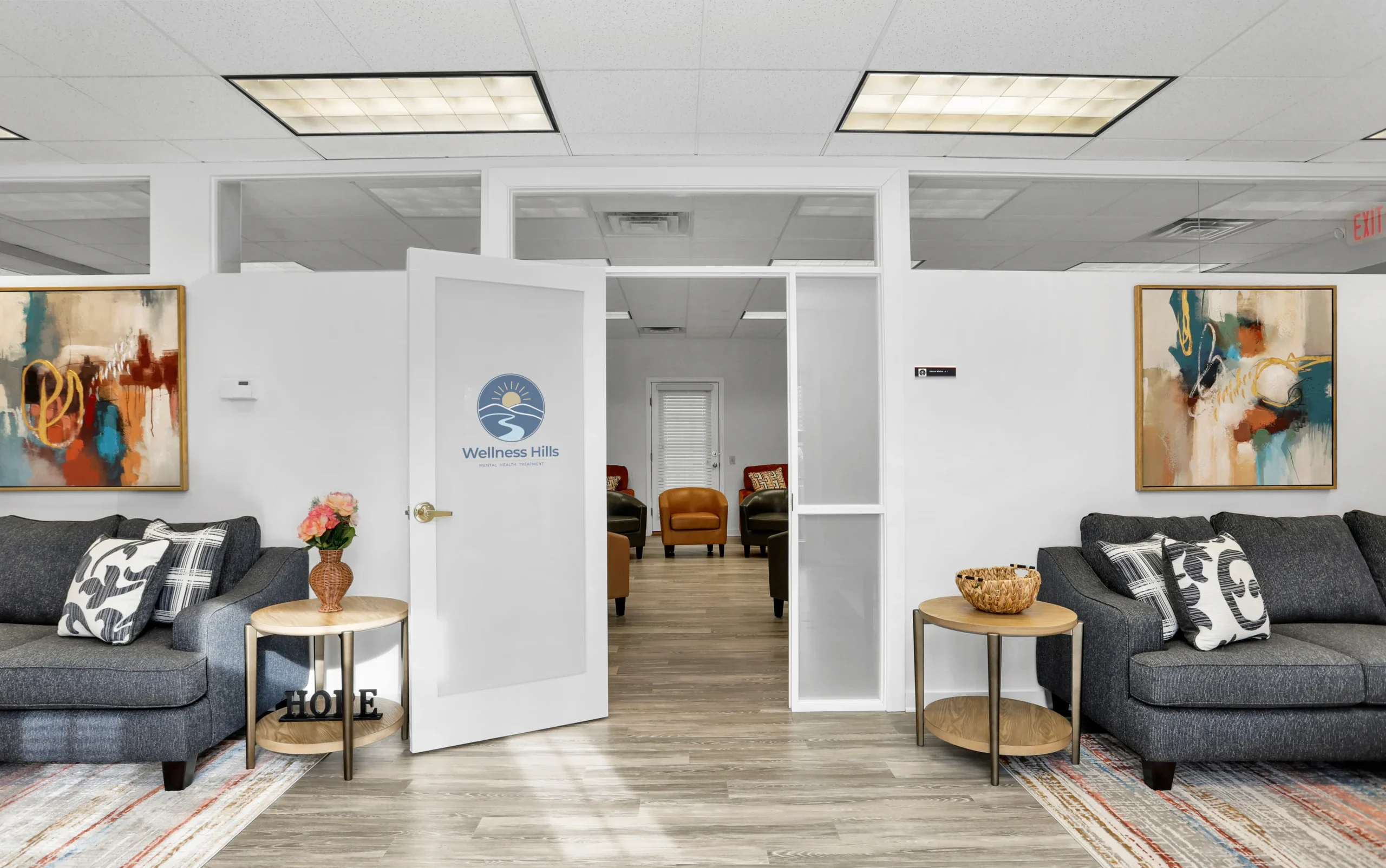

At Wellness Hills, your support team includes several experts working together. Your care may involve a strong team of licensed therapists, a main therapist for individual talks, and a leader for group sessions.
Psychiatric evaluations are provided by Paula Weisman, PMHNP-BC. Care coordination is supported by our admissions and clinical coordination team to help organize scheduling, referrals, and next steps. Clinical oversight is provided by Leigh Rasmussen, LPC, LCADC, and treatment recommendations are tailored to assessment, safety needs, and clinical goals.
Wellness Hills uses measurement-based care to track your progress, using tools like:
Every few days, you and your therapist will do a progress review to see trends:
We can help perform an initial check of your coverage details, including estimated copays and the status of your deductibles, before you begin therapy sessions.
Coverage and out-of-pocket costs vary by plan, diagnosis, medical necessity criteria, and whether deductibles are met. Verification helps estimate cost, but final coverage decisions are made by the insurer.
We work with major NJ providers (e.g., Horizon Blue Cross Blue Shield, AmeriHealth, UnitedHealthcare, Aetna, and Cigna). They typically cover MI therapy when it is medically necessary.
These FAQs address the most common questions we hear during MI-focused pre-admission calls and intake assessments.
Yes. MI has a strong research base across mental health and substance-related care.
MI is not time-limited. Duration depends on goals, level of care, and individual needs.
MI may support engagement when symptoms consistent with anxiety or depressive disorders interfere with follow-through.
Yes. MI directly targets such patterns.
Eligibility depends on clinical appropriateness, safety, and risk level, and where you are located during sessions. Please contact the admissions team with any questions about telehealth options.
Contact the admissions team for a confidential assessment to see which program is right for you: PHP, IOP, or outpatient therapy. Our admissions team will clarify documentation requirements and help you verify insurance coverage to avoid confusion about costs or logistics.
Wellness Hills Mental Health Treatment is a state-licensed facility (NJ Dept. of Health License No. 70290104) providing outpatient levels of care, including Partial Hospitalization (PHP), Intensive Outpatient (IOP), and Outpatient (OP) services.
When a higher level of care is clinically indicated, we help coordinate referrals to appropriate inpatient psychiatric hospitals.
Motivational Interviewing Intervention for Antidepressant Adherence Among Latinos With Depression | PubMed – Randomized controlled trial examining an MI-based intervention to improve antidepressant adherence among Latino adults with depressive disorders.
Motivational Interviewing Improves Medication Adherence: A Systematic Review and Meta-analysis | Journal of General Internal Medicine – Systematic review and meta-analysis evaluating whether MI improves medication adherence across studies; effects vary by condition and study design.