
Social Anxiety Disorder Treatment

Wellness Hills Mental Health provides Social Anxiety Disorder (SAD) treatment in New Jersey using evidence-based therapy like CBT and clinician-guided exposure.

Evidence-Based Social Anxiety Care

Social Anxiety Therapy at Wellness Hills

Social anxiety isn’t just a personality trait that you’re stuck with forever. It is a cycle where being afraid of what people think makes you start avoiding things. The more you avoid people or situations, the smaller your world gets. Eventually, that fear starts making all your decisions for you, setting strict limits on where you go and what you’re allowed to do.

At Wellness Hills Mental Health in Chester, NJ, we move beyond generic talk therapy to provide a high-fidelity, evidence-based protocol for social anxiety treatment. Our approach is anchored in clinical specificity, addressing the physical spotlight effect, anticipatory anxiety, and the post-event rumination that keeps you trapped.

By utilizing a structured progression through Outpatient (OP), Intensive Outpatient (IOP), or Partial Hospitalization (PHP) levels of care, we provide the repetition and clinical oversight necessary to bridge the gap between knowing what to do and doing it in the real world.


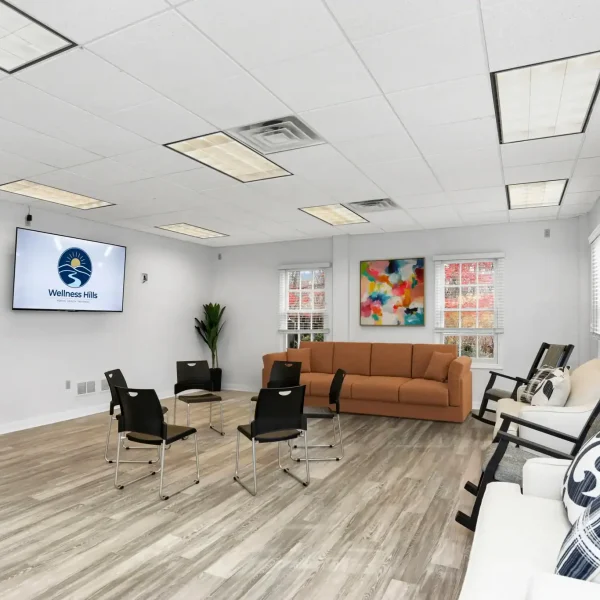
Cozy lounge at Wellness Hills with modern decor.
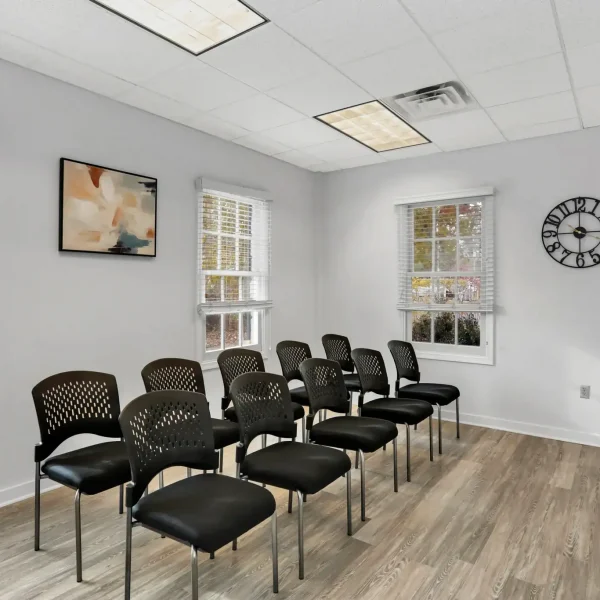
Group therapy room with arranged chairs at Wellness Hills Mental Health Treatment in New Jersey.

Jump To Section

Social Anxiety Symptoms

Social Anxiety Can Shrink Your Life Without You Noticing

Social anxiety operates as a false alarm system, where your brain misinterprets social scrutiny as a survival threat, leading to chronic avoidance and safety behaviors.

  • You feel like everyone is watching you.
  • Your body reacts (you might blush, sweat, or notice your hands shaking). Your heart might beat very fast, or you might feel like you can’t catch your breath.
  • Your mind goes blank (suddenly freezes up and can’t find the right words).
  • You want to run away.
  • You worry about what happened later. Long after you leave, you might keep replaying the moment in your head, worrying that you did something embarrassing or that people didn’t like you.

Note: therapists can help you learn ways to manage these feelings so they don’t keep you from doing what you want.

The Avoidance Cycle and Why it Gets Stronger Over Time

The relief trap is the primary engine of social anxiety disorder; every time you avoid a social situation, your brain receives a hit of relief that reinforces the fear.

  • Subtle avoidance, such as looking at your phone, rehearsing sentences, or staying near exits.
  • Anticipatory dread (the pre-event anxiety that consumes mental energy days before an interaction).
  • Post-event rumination: Replaying mistakes for hours or days, which reinforces a sense of social incompetence.
  • Life contraction: The gradual loss of career growth, romantic connections, and community belonging to maintain the safety of isolation.

Social Anxiety vs Shyness vs Introversion

Introverts stay home because they enjoy the quiet, shy people stay quiet until they feel safe, and socially anxious people stay home because they are afraid.

  • Introversion: This is about your energy. Being around people makes you feel tired, so you spend time alone.
  • Shyness: A personality trait involving slow-to-warm behavior that does not fundamentally block life goals.
  • Social Anxiety Disorder: This is a scary feeling that gets in the way of your life. It is an intense fear that people are judging you or that you will do something embarrassing.
  • Impairment threshold: If your fear prevents you from speaking in meetings, dating, or attending school, it may be consistent with a clinical disorder.

When Social Anxiety Becomes Urgent

Social anxiety becomes an emergency when it stops being just shyness and starts taking over your life.

Signs That Warrant Faster Clinical Support

  • Total Withdrawal: You’ve stopped leaving the house entirely because the idea of being around people feels like a physical threat.
  • Severe Panic: Panic attacks that lead to agoraphobic patterns or frequent ER visits.
  • Suicidal Ideation: Profound shame and isolation leading to thoughts that life is no longer worth living (Call/Text 988).
  • Functional Collapse: Immediate risk of job loss or academic expulsion due to an inability to perform or attend.

If Alcohol, Cannabis, Stimulants, or Medication Changes Are Involved

Substance use is often a maladaptive safety behavior used to dampen the physical symptoms of social fear.

  • Alcohol/Cannabis Dependency: Using substances to get through social events, which leads to rebound anxiety.
  • Stimulant Sensitivity: Caffeine or ADHD medications can sometimes exacerbate the physical jitteriness associated with social panic.
  • The Cycle: You get a little liquid courage for one night, but the next day you feel more anxious and embarrassed, which makes you want to hide even more.
  • Clinical Disclosure: To get better, you have to be 100% honest with your therapist about what you’re using. They aren’t there to judge you; they just need to know so they can give you the right (and safe) treatment.

New Jersey Crisis Supports and After-Hours Options

If you are in a crisis and need someone to talk to immediately, New Jersey has teams ready to help you 24/7:


  • 988 Lifeline: Call or text 988. This is for anyone feeling overwhelmed, thinking about self-harm, or struggling with drugs/alcohol.
  • NJ Hopeline: Call 1-855-654-6633. This is a New Jersey-specific number for people having a mental health crisis.
  • 2nd Floor Youth Helpline: Call or text 1-888-222-2228. This is a special line just for kids and young adults in NJ.
  • Hospital Help: If you don’t feel safe, you can go to the ER at places like Saint Clare’s or Morristown Medical Center. They have specialists who can check on you and make sure you’re okay.
Man feeling stressed in a social setting with people in the background
Care team member smiling in an office environment
Mental health therapy session with a client receiving support

Screening & Diagnosis

DSM-5 Signs of Social Anxiety Disorder and Related Presentations

At Wellness Hills, we use the DSM-5-TR updates to ensure our diagnostic screening matches the latest academic standards.

DSM-5-Aligned Criteria in Plain Language

Clinical social anxiety disorder is defined by an intense, persistent fear of one or more social or performance situations in which the person is exposed to unfamiliar people or to possible scrutiny by others.

The individual fears they will act in a way that will be humiliating or embarrassing. This distress must interfere significantly with the person’s normal routine and lead to marked avoidance. Our clinical team, led by Leigh Rasmussen, LPC, LCADC, performs a formal differential diagnosis to confirm your symptoms aren’t better explained by other mental health conditions we treat.

Performance-Only Social Anxiety and Fear of Being Observed

This is a specific type of anxiety that hits high-functioning individuals when they feel like they are being tested or watched by others.

  • The inability to communicate expertise due to overwhelming physiological arousal.
  • Intense fear of eating, drinking, or writing while being observed.
  • Avoiding the round table or being called on by leadership.
  • Fear that a single visible error will result in permanent social rejection.

Patterns That Can Look Similar and Why Assessment Matters

  • Avoidant Personality:  A pervasive sense of being fundamentally unappealing or inferior.
  • Trauma-Based Shame: Post-traumatic responses that mimic social fear but require specific trauma-informed processing.
  • Panic Disorder: the fear of the physical sensations themselves (e.g., my racing heart means I am having a stroke).
  • GAD: A broad spectrum of worry about multiple life domains (like finances, health, safety).

Proper treatment requires distinguishing between social anxiety and adjacent clinical entities to avoid wrong-path therapy.

Treatment Protocol

Evidence-Based Treatment for Social Anxiety: The Wellness Hills Protocol

We are a licensed facility, NJ DOH License No. 70290104, that mainly uses science-backed methods like CBT and exposure therapy to help you change your reaction to social anxiety.

CBT for Social Anxiety and How it Changes the Fear Response

Cognitive Behavioral Therapy at Wellness Hills is active, not passive. We focus on cognitive restructuring:

  1. Identifying Hot Thoughts, such as “I will look like an idiot.”
  2. Probability Overestimation: Correcting the belief that a negative outcome is certain.
  3. Catastrophic Thinking: Challenging the idea that a social mistake is an unrecoverable disaster.
  4. Behavioral Experiments: Small, real-world tests to prove your anxious brain wrong.

Exposure Therapy That is Planned, Graded, and Measurable

We follow a strict exposure hierarchy protocol, led by licensed clinicians, to reduce the risk of flooding or becoming overwhelmed.

  • Step 1: Mental visualization of the feared event.
  • Step 2: Role-playing social interactions in a safe group setting at our Chester facility.
  • Step 3: In vivo (real-life) exposures, such as making a phone call or making eye contact with a stranger.
  • Outcome: This process can help extinguish the fear response through habituation; the brain eventually stops sending the alarm.

ACT Strategies for Rumination, Self-Criticism, and Shame Loops

Acceptance and Commitment Therapy (ACT) provides the psychological flexibility needed to stop fighting your thoughts.

  • Defusion: Realizing “I am having the thought that people are judging me” rather than “People are judging me.”
  • Values Realignment: Does avoidance align with the person you want to be?
  • Willingness: Developing the muscle to feel anxious while still doing the things that matter.
  • Self-as-Context: Moving past the identity of being a socially anxious person.

Skills That Support Treatment Between Sessions

Our protocol includes specific Between-Session Assignments (BSAs) to ensure treatment fidelity, for example:

  • Exposure logs: (for recording distress levels before, during, and after a social task).
  • Safety behavior elimination: (creating a targeted plan to identify and stop subtle avoidance tactics).
  • Mindfulness practice: (can help redirect the brain to stay present in the current environment. It is specifically designed to counteract mind-reading, the cognitive distortion where one assumes they know what others are thinking.
  • Communication drills: (you and your therapist act out a scene, like ordering at a cafe or talking to a coworker, so you can practice eye contact and clear speech in a safe spot before you do it for real).
Individual therapy session with a client engaged in conversation

Get Up to 100% Covered with Insurance

We Work With Most Major Insurance Companies

Find out your personal coverage & options for treatment with a free verification of benefits from our admissions team. Whether you come to our programs or not we will ensure that you receive personalized recommendations for treatment based on your needs.


First Name:(Required)
Last Name:(Required)
Friendly team member smiling while holding a tablet in an office setting
Client speaking with a therapist during a counseling session in an office

Medication Management

Medication Support for Social Anxiety

Medication management is provided by Paula Weisman, PMHNP-BC, and is designed to lower the physiological ceiling of your anxiety.

First-Line Medication Categories and What They May Target

Medication may be recommended based on your symptoms, history, and overall level of impairment. When appropriate, your prescriber coordinates with your therapist to support a cohesive treatment plan and monitor response over time.

  • Therapy First: We believe talk therapy is the most important tool for long-term change.
  • Medication as a Helper: We don’t use medicine to numb you or erase anxiety entirely. We use it to make the physical symptoms of fear feel less overwhelming.

We adhere to evidence-based guidelines from authorities in mental health treatment, including the American Psychiatric Association, the American Psychological Association, the U.S. Food and Drug Administration (FDA), and the Anxiety & Depression Association of America (ADAA), typically utilizing SSRIs or SNRIs to reduce the intensity of the fight-or-flight response.

  • SSRI/SNRI: Long-term stabilization of the nervous system.
  • Symptom Targets: Reduced on-edge feeling, better sleep, and lower physical reactivity.

Performance Anxiety Support and Safety Considerations

If you only feel overwhelmed during big moments, like a speech or a presentation, a doctor might give you medicine to use only for that specific time. This medicine can help keep your heart from racing so you can stay calm enough to get through the event. We only use these if we really need to, and we watch things closely to make sure the medicine is helping you practice your therapy skills rather than just covering up the problem.

Coordinating Medication With Therapy and Primary Care

Integrated care is the standard at Wellness Hills. Your psychiatric prescriber and primary therapist meet for clinical rounds weekly to adjust your protocol based on:


  1. LSAS Scale Trends: Are your social anxiety scores dropping?
  2. Tolerance: Are side effects impacting your ability to do exposures?
  3. Functional Goals: Is the current combination helping you return to work or school?

Client Testimonials

What Our Clients Say About Wellness Hills

Woman wearing a whit sun hat.
Male wearing headphones
Smiling woman on beach

Average 5.0 Rating

“Wellness Hills Truly Changed My Life. From the Moment I Walked in.”

"I felt supported, understood, and never judged. The therapists here actually listen, and the groups helped me build confidence and skills I didn’t even know I needed. I’m healthier, calmer, and finally hopeful about my future. I’m so grateful for the care I received.”

0 %

Client Satisfaction

OP, IOP & PHP Options

The Recovery Timeline: What to Expect in OP, IOP, and PHP

Wellness Hills categorizes care by functional impairment to ensure you are not under-treated or over-supported.

Outpatient (OP) is best for people who are still functioning day-to-day but have social avoidance that is getting in the way. The clinical focus is weekly skill application and cognitive work (like structured CBT and planned exposure practice). Most people stay in outpatient care for 12–20+ weeks to build habituation and real-life follow-through.

Intensive Outpatient (IOP) is a better fit when someone is struggling to maintain work or school due to panic, shame, or avoidance patterns that feel hard to break. The clinical focus is higher-frequency support, typically 3 days per week, with intensive group practice and repetition to strengthen skills faster. Many people benefit from 6–12 weeks of IOP for consistent skill-building and momentum.

Partial Hospitalization (PHP) is appropriate when someone is experiencing total withdrawal and has difficulty functioning in daily life. The clinical focus is the highest structure, usually 5 days per week, with daily stabilization and carefully paced exposure hierarchies. PHP is often 2–6 weeks, followed by a step-down to IOP as symptoms stabilize and functioning improves.

Individual treatment timelines for SAD vary significantly. While professional programs provide standard estimated ranges, several key factors can extend or shorten your time: 

Personal and Practical Factors

  • Treatment Engagement.
  • Therapeutic Alliance (The quality of the relationship and trust between the patient and therapist).
  • Medication Response (SSRIs/SNRIs may take 3–6 weeks to show effects and up to 12 weeks for a full response).
  • Motivation Levels.

Clinical Factors

  • Severity of Symptoms.
  • Co-occurring Disorders.
  • Specific Diagnosis (Severe impairment in daily functioning or speech often requires long-term, intensive intervention).
  • Step-Down or Step-Up Models: At Wellness Hills, you may step down from PHP to IOP sooner than expected if you stabilize quickly, or you might step up if standard outpatient care isn’t sufficient.
  • Maintenance vs. Recovery: One may choose to stay in standard outpatient therapy (OP) for months or years after their primary symptoms have subsided to prevent relapse and maintain new skills.

How Screening and Placement Decisions Are Made

The people who work in admissions, like Rachael La Ponte and Brittany Robertson, make starting treatment easy for you. They figure out the best program for you using three steps:

  1. Checking Your Symptoms: They first look at how severe your anxiety is.
  2. Looking at Your Daily Life: They check if you are currently able to do everyday things like work or school.
  3. Picking the Right Program: Based on all the information, they decide which type of program is the best fit (OP, IOP, or PHP).

In many cases, we can schedule an initial assessment within a short window, depending on availability and clinical fit.

Social Anxiety Disorder Treatment at Wellness Hills in Chester, New Jersey

We provide a HIPAA-compliant environment for clinical recovery.

Who Provides Care, and What Each Role Does

Our multidisciplinary team brings decades of combined experience to social anxiety disorder treatments in New Jersey.

Co-Occurring Conditions We Screen For (Because They Can Change the Treatment Plan)

Social anxiety doesn’t always show up alone. During assessment, we screen for patterns that commonly overlap with social anxiety because they can change the pace of exposure work, affect motivation, and influence which skills we prioritize first.

  • Depressive Disorders: Treating the isolation depression that often follows withdrawal.
  • Substance Coping: Addressing the may use of alcohol to mask social fears.
  • OCD Patterns: Correcting the need for social certainty and checking behaviors.
  • Trauma-Related Shame: Processing the root threat sensitivity from past social trauma.

Outcomes Tracking and Measurement-Based Care

We do not rely on gut feelings to determine if you are getting better. We may use:

  • GAD-7 (Generalized Anxiety Disorder 7-Item Scale).
  • BAI (Beck Anxiety Inventory).
  • HADS-A (Hospital Anxiety and Depression Scale – Anxiety Subscale).
  • STAI (State-Trait Anxiety Inventory).
  • DASS-21 (Depression, Anxiety, and Stress Scale).

For more targeted assessments, we may also use: 

  • Penn State Worry Questionnaire (PSWQ).
  • Panic Disorder Severity Scale (PDSS).
  • Y-BOCS.
  • Liebowitz Social Anxiety Scale (LSAS).
  • Functional Benchmarks: Tracking your Return to Interaction (e.g., attending a meeting, ordering food, joining a group).

Weekly reviews to adjust the clinical plan if your scores do not show a downward trend.

What Progress Can Look Like in Treatment for Social Anxiety

Progress treatment often happens in phases. You may still feel anxious early on, but the difference is that anxiety stops controlling your decisions.

Weeks 1–2: Stabilizing and reducing avoidance

  • You start identifying your biggest triggers and safety behaviors (such as avoiding eye contact, over-preparing, and escaping early).
  • You learn how anxiety works in your body and how avoidance reinforces the fear cycle.
  • The goal is not confidence yet; it’s momentum and clarity.

Weeks 3–6: Building tolerance and real-world follow-through

  • Exposure practice becomes more consistent and structured.
  • Anxiety may still show up, but recovery time gets shorter.
  • You begin doing situations you used to avoid (making calls, attending events, speaking up).

Weeks 6–12+: Expanding life range and improving self-trust

  • You rely less on reassurance and overthinking after interactions.
  • The post-event replay starts shrinking.
  • You begin building new routines and relationships with more flexibility and less fear.

If symptoms aren’t improving after the first few weeks, we don’t blame the patient; we adjust the treatment plan. That may include changing the exposure pace, strengthening skills first, and addressing co-occurring issues like panic or depression.

Large group room entrance at Wellness Hills.

Common Questions

Frequently Asked Questions About Social Anxiety Disorder Treatment

These FAQs cover social anxiety vs. introversion, treatment options, and what to expect when getting started.

How do I know if it is social anxiety or just being introverted?

Look at why you avoid social situations. Introversion is a personality trait about where you get your energy, while social anxiety is a mental health condition rooted in fear.

Research suggests that social anxiety treatment can be most effective when it combines CBT with clinician-guided exposure.

While the idea of facing fears is intimidating, our exposure therapy is graded, meaning we start with situations that are only mildly uncomfortable.

Medication is not a requirement for everyone. It is a clinical tool used when indicated to help manage the physical intensity of anxiety.

IOP is designed to adjust with work or school schedules, whereas the PHP is a full-day commitment for those requiring higher levels of stabilization.

Yes. A clinician-led group can provide structured practice when appropriate and integrated into a broader plan.

Admissions & Insurance

Insurance Verification, Costs, and What Admissions Can Clarify

We can’t remove every cost-related concern, but we can reduce financial anxiety early by helping you verify benefits, understand coverage, and plan next steps before committing to treatment.

  • Real-Time Verification: Understanding your coverage and estimated costs before your first appointment.
  • Credentialed Care: Our status as a licensed NJ facility allows for broader insurance accessibility.
  • Privacy: We strictly adhere to HIPAA; your employer or school is never notified without your explicit release.

Anxiety Disorders | American Psychiatric Association (APA) – Patient-facing overview from the APA that explains what anxiety disorders are, how they present, and why professional evaluation and evidence-based treatment matters.

Selective Serotonin Reuptake Inhibitors (SSRIs) Information | U.S. Food & Drug Administration (FDA)Official FDA reference explaining SSRIs as a medication class and listing common SSRI generic and brand names.

Study Record: NCT01975480 | ClinicalTrials.gov (National Library of Medicine) – Government-run registry record documenting an SNRI-related clinical study in the anxiety treatment space.

HIPAA Privacy Rule and Sharing Information Related to Mental Health | U.S. Department of Health & Human Services (HHS) – Authoritative HIPAA guidance explaining when mental health information can or can’t be shared, including limits around psychotherapy notes and when disclosure may be permitted for safety.


Therapist taking notes during a mental health session in an office

We're Here When You Need It Most

Start Your Path To Wellness Today