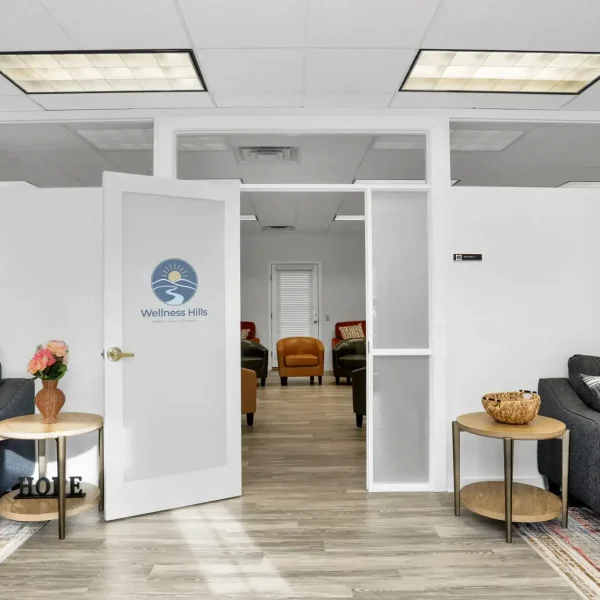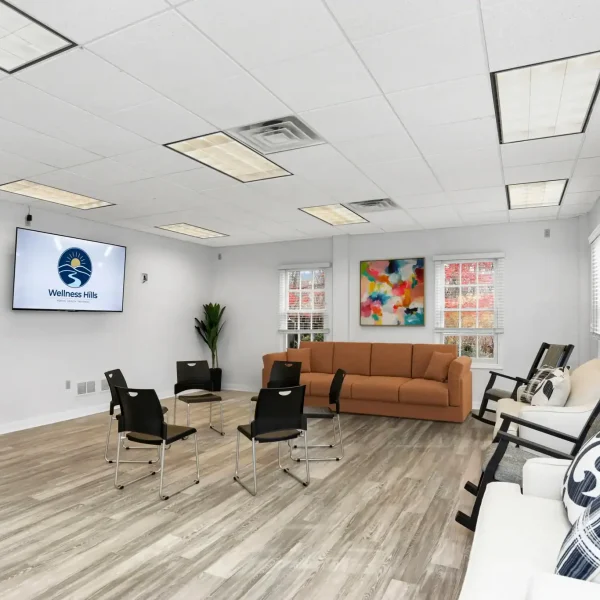

If you’re searching for DBT therapy in New Jersey, Wellness Hills offers structured DBT across PHP, IOP, and outpatient levels of care in Chester, starting with an assessment.
Dialectical Behavior Therapy (DBT) is a specialized, evidence-based intervention designed specifically for the stabilization of high-acuity emotional and behavioral disorders. At Wellness Hills, our clinicians are NJ-licensed and trained in comprehensive DBT models, supported by weekly consultation team meetings that maintain treatment fidelity and uphold strict adherence to Linehan’s evidence-based DBT protocols.
We provide a comprehensive continuum of care, transitioning patients through Partial Hospitalization Programs (PHP), Intensive Outpatient Programs (IOP), and general outpatient settings to ensure long-term functional recovery. A confidential clinical assessment is required to determine the appropriate intensity of care for residents seeking stabilization from intense emotional instability and treatment-resistant conditions.

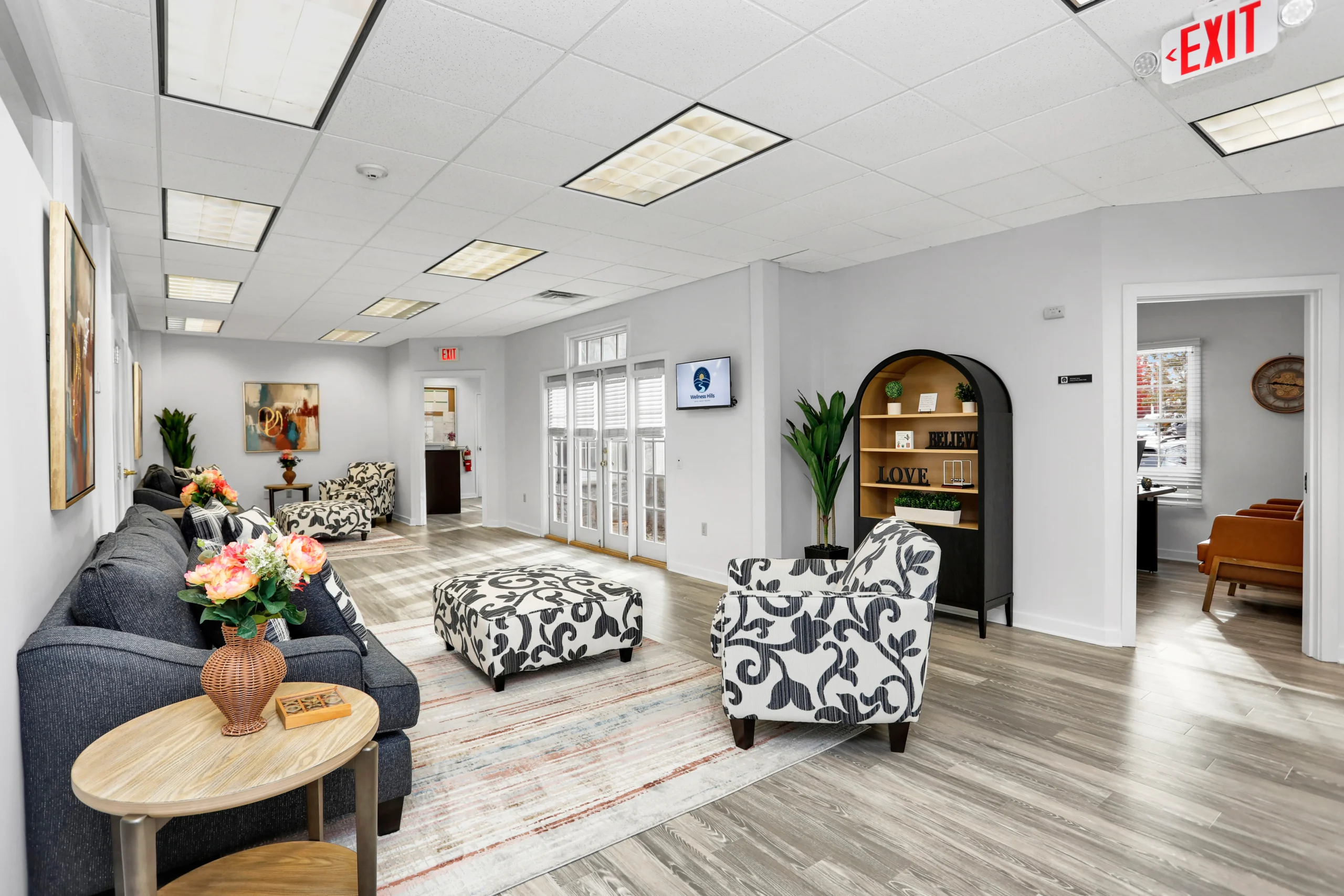
Dialectical Behavior Therapy in New Jersey is recommended for individuals whose emotional baseline is chronically elevated, often resulting in impulsive, high-risk, or life-interfering behaviors.
DBT in New Jersey is particularly suited for individuals whose emotional baseline is chronically elevated, resulting in impulsive, unsafe, or life-interfering behaviors. Our clinical team focuses on high-acuity targets that traditional talk therapy or CBT often fails to address.
When analyzing DBT vs CBT, the primary clinical indicator for DBT is emotional flooding. This occurs when a patient is too reactive or physiologically overwhelmed to engage in the cognitive restructuring typical of standard CBT.
While CBT Therapy focuses on identifying and changing thought distortions, DBT prioritizes regulation and crisis survival first. We acknowledge that behavioral change is impossible while a patient is in a state of high physiological arousal. At Wellness Hills in Chester, NJ, clinicians assess for this flooding to determine if a patient requires the dialectical balance of validation and change. Many of our patients transition to integrated CBT work only after they have demonstrated mastery over core DBT distress tolerance.




At Wellness Hills, we move beyond generic DBT-informed care by anchoring our protocol in a team-based, fidelity-focused model. Our protocol aligns strictly with the core principles established by Marsha M. Linehan’s research and the standard components of comprehensive DBT.
To ensure high-fidelity delivery, our program includes:
The clinical integrity of our DBT program at Wellness Hills is maintained by a specialized leadership team with deep experience in high-acuity behavioral health care:
DBT and all other therapy services are delivered by NJ-licensed clinicians trained in comprehensive DBT models.
Our protocol is rooted in the Biosocial Theory, which posits, according to the National Center for Biotechnology Information (NCBI), that emotion dysregulation results from the interaction of a biological vulnerability (high sensitivity) and an invalidating environment.
We help clients navigate the core dialectical tension: accepting their current reality while simultaneously working to change it. This validation-heavy approach reduces the shame often associated with high-intensity emotions, allowing the patient to view their vulnerability as a manageable clinical trait rather than a character flaw.
Wellness Hills delivers DBT skills training in New Jersey through a structured curriculum covering the four essential modules of behavioral mastery.
The foundation of all skills, focusing on “Wise Mind”, the overlap between the Reasonable Mind and the Emotional Mind.
Patients learn the “What” skills (Observe, Describe, Participate) and the “How” skills (Non-judgmentally, One-mindfully, Effectively) to stay present and reduce reactivity.
Crisis Survival strategies are designed to get through high-pain moments without making them worse. Key skills include:
Patients learn to “Check the Facts” to see if emotions match reality and utilize Opposite Action to change unwanted emotional responses. This includes the PLEASE skill (Physical illness, Levelheaded eating, Avoid mood-altering substances, Sleep, Exercise) to reduce emotional vulnerability.
Techniques for assertive communication and boundary setting. We teach the DEAR MAN strategy to get needs met, as well as GIVE and FAST to maintain relationship health and self-respect.

Find out your personal coverage & options for treatment with a free verification of benefits from our admissions team. Whether you come to our programs or not we will ensure that you receive personalized recommendations for treatment based on your needs.






Treatment at Wellness Hills functions like a behavioral laboratory, rather than a standard talk-therapy environment.
A comprehensive high-fidelity program consists of two primary components:
Lasting recovery depends on skills generalization, the ability to apply DBT tools in home, work, or school environments. To facilitate this, we require the use of a DBT diary card. This daily tracking tool monitors emotions, urges, and specific skills practiced throughout the week.
This data is reviewed at the beginning of every individual session to determine the clinical focus. At Wellness Hills, consistent use of the diary card is strongly recommended for long-term stabilization.





Average 5.0 Rating
"I felt supported, understood, and never judged. The therapists here actually listen, and the groups helped me build confidence and skills I didn’t even know I needed. I’m healthier, calmer, and finally hopeful about my future. I’m so grateful for the care I received.”
Client Satisfaction


Our team utilizes a forensic approach to behavior, deconstructing unhelpful patterns to replace them with effective, skill-based responses.
We prioritize behaviors in a strict hierarchy: life-threatening behaviors, therapy-interfering behaviors, and quality-of-life-interfering behaviors.
When a target behavior occurs, your therapist will conduct a chain analysis.
This is a minute-by-minute breakdown of the events, thoughts, and body sensations that led to the behavior.
This is followed by a solution analysis, where we identify exactly where a skill, such as STOP or TIPP, could have broken the chain.
The effectiveness of high-fidelity Dialectical Behavior Therapy (DBT) is supported by randomized controlled research, including a landmark clinical trial published in JAMA Psychiatry.
In that study of high-risk adolescents receiving comprehensive DBT, 90.3% of participants had no repeat suicide attempts following treatment. This is significant compared to 78.9% of those receiving individual and group supportive therapy. Rates of nonsuicidal self-injury were also significantly lower. 56.9% of DBT participants reported no incidents, versus 40.0% in the comparison group. When examining overall self-harm, 54.2% of individuals receiving DBT reported no self-harm behaviors, compared to 36.9% among those in supportive treatment.
At Wellness Hills, our adult DBT program is designed to adhere closely to these evidence-based principles. However, while the referenced study involved high-risk adolescents, adult outcomes may differ. At Wellness Hills, adults typically show measurable reductions in high-risk urges within 30–90 days of consistent DBT participation.
Disclaimer: Note that the JAMA Psychiatry study focused on high-risk adolescents receiving comprehensive DBT, showing significant reductions in repeated suicide attempts and non-suicidal self-injury compared to supportive therapy. These findings are historical and foundational, illustrating the potential impact of DBT in structured, high-acuity settings. They should not be interpreted as predictive of outcomes in adult populations.
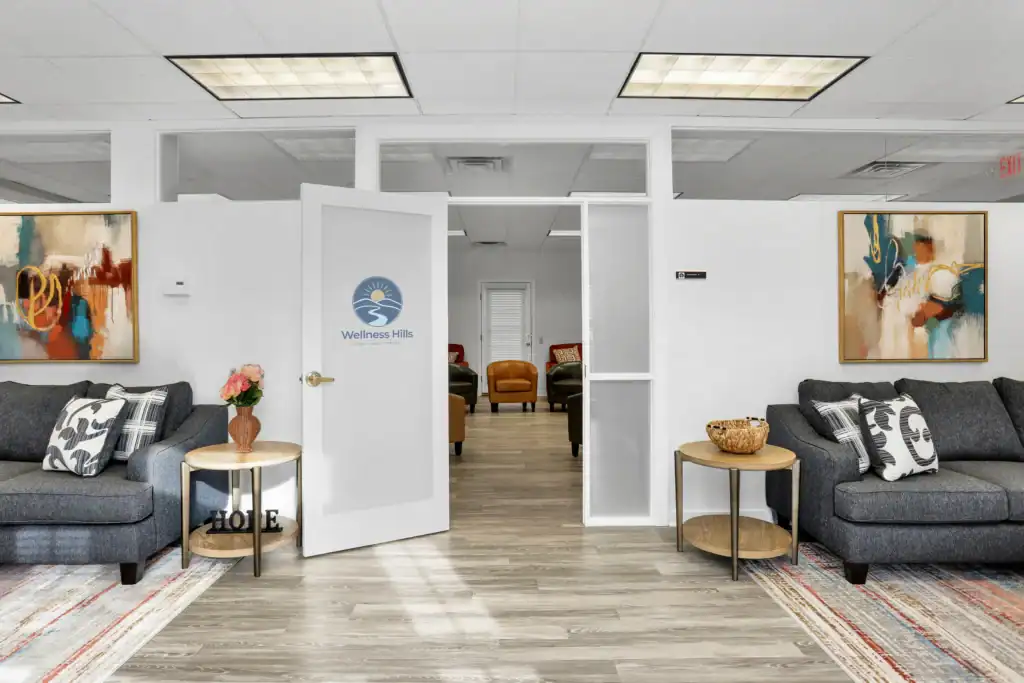


We offer a tiered approach to match the intensity of care with the patient’s current level of clinical risk. See our available programs.
We offer flexible delivery models to ensure access for all New Jersey residents.
For higher-risk stabilization needs, we may recommend in-person PHP/IOP rather than telehealth-only care.
The path to starting DBT focuses on removing barriers to clinical care.
Our admissions team verifies benefits and provides a detailed breakdown of your coverage. This includes your deductible, copay, coinsurance, and any requirements for prior authorization. We work directly with health insurance providers to streamline out-of-pocket costs before treatment begins.
Following a comprehensive clinical assessment, you will receive a formal recommendation for PHP, IOP, or Outpatient care. Once matched with a DBT therapist in NJ, you will be introduced to foundational tools, including your first diary card.
While DBT is a powerful stabilization tool, it is not a substitute for emergency services in an acute life-threatening situation.
Wellness Hills provides scheduled PHP and IOP services, but we are not an emergency room or an inpatient lockdown facility.


These FAQs answer common DBT questions that come up during pre-admission calls and the intake assessment.
While a full skills cycle takes about 6 months, many in our IOP or PHP programs achieve significant behavioral stabilization within the first 90 days before stepping down to outpatient maintenance.
No. DBT is effective for any pattern of pervasive emotion dysregulation or impulsivity. Our assessment focuses on your symptoms and treatment needs.
Yes. Reducing self-harm urges is a primary target. DBT for self-harm urges (safety framed) teaches distress tolerance skills and uses chain analysis to build alternatives to self-injury.
Our program includes core DBT elements such as individual therapy, structured skills training, diary cards, and chain analysis, supported by clinician consultation teams.
Choosing to start Dialectical Behavior Therapy in NJ is a major step toward reclaiming your life from emotional instability. At Wellness Hills, we provide a confidential, HIPAA-compliant path to recovery, overseen by experts like Leigh Rasmussen and Abby Goodrich.
Our DBT program integrates structured individual therapy, skills groups, and daily diary cards to track patient progress, guided by weekly consultation team reviews aligned with Linehan’s model. What happens next after you contact us is a confidential consultation with our admissions team to verify your insurance and schedule your initial clinical evaluation.
Efficacy of Dialectical Behavior Therapy for Adolescents at High Risk for Suicide: A Randomized Clinical Trial – Randomized clinical trial evidence on DBT-A outcomes for high-risk adolescents (self-harm/suicide-related outcomes).
Dialectical Behavior Therapy as Treatment for Borderline Personality Disorder – Clinical overview of DBT for BPD, including the standard DBT structure/components and treatment targets.
The Biosocial Approach to Human Development, Behavior, and Health Across the Life Course – Background on the biosocial framework (how biological and social factors interact), used here to support biosocial-model explanations.