

Family Therapy in New Jersey

Family therapy at Wellness Hills in Chester, NJ is clinician-led and integrated into PHP, IOP, and outpatient care to strengthen communication and support recovery.

Family Support in Treatment

Family Therapy For Mental Health

When a family member is struggling with their mental health, the entire system often feels the strain. Family therapy at Wellness Hills in Chester, NJ, is a structured, clinical process integrated directly into our Partial Hospitalization (PHP), Intensive Outpatient (IOP), and Outpatient programs. It focuses on changing the relational and communication patterns at home that can unintentionally keep an individual’s symptoms stuck, while building a practical support plan for recovery.

Please call our confidential admissions line at 855-560-5523 regarding options for therapy with your family members suffering from DSM-5 mental health conditions, such as depression, anxiety, trauma/PTSD, as well as bipolar disorder, and verify whether your NJ insurance includes family sessions as part of treatment.


Mental health clinician holding a notebook and gesturing while speaking in a calm office setting
Modern and welcoming common area at Wellness Hills Mental Health Treatment Center in Chester, New Jersey.

Jump To Section

The Family System & Recovery

Family Therapy Helps Change Patterns at Home that Keep Symptoms Stuck

How a family talks and acts together can either help a member heal or accidentally make a situation worse during a mental health crisis.

Signs Your Family System May Be Adding Pressure to Recovery

Families naturally adjust around symptoms to reduce immediate pain. It’s a survival instinct. But over time, these adaptations can unintentionally reinforce the very distress someone battling a mental illness may be trying to escape.

Common signs include:

  • Same Fights, Different Day: Arguments always happen the same way. For example, they heat up quickly and leave everyone feeling exhausted.
  • Walking on Eggshells: Family members adjust what they say and do to avoid triggering distress, often at the cost of clear boundaries and honest communication.
  • Unclear Rules: Rules are either super strict or totally absent, making the home feel unpredictable and stressful
  • Role Confusion: When a child becomes an emotional caretaker or a partner becomes a full-time monitor. Healthy roles erode.
  • Crisis-Only Communication: You only talk when things explode. There is no proactive repair, just damage control.

These patterns aren’t always about fault. A licensed clinician can help assess and guide the family safely through the healing process.

Goals of Family Therapy in Mental Health Treatment

Family therapy can help the family feel hopeful and supported as everybody works toward positive change.

Sessions may work toward:

  • Clearer communication and emotional regulation
  • Realistic boundaries, roles, and routines
  • Reducing accommodation and highly expressed emotion
  • Aligning caregivers around safety plans
  • Supporting follow-through with treatment recommendations
  • Building practical support systems for daily life

Progress is measured by stability, consistency, and reduced strain

Who Family Therapy Can Include

Confidentiality in family therapy is often a top priority. Specific individuals who can be included in sessions include:

  • Immediate Family: Parents, guardians, siblings, and children.
  • Extended Family: Grandparents, aunts, uncles, cousins, and other relatives.
  • Blended Family Members: Step-parents, step-siblings, and co-parents.
  • Family of Choice: Close friends, romantic partners, or long-term supportive figures who are not related by blood or marriage.
  • Caregivers: Professional caregivers, kinship caregivers, or foster parents.

Key considerations for inclusion:

  • Therapy sessions are tailored to your family’s needs, encouraging collaboration and making you feel valued in the process.
  • Willingness to Participate: Therapy is most effective when those involved are committed to change, though therapists can still work with whoever is willing to attend.
  • Age Appropriateness: Therapists determine whether children are old enough to understand the issues or whether certain adult-focused topics (such as complex marital problems) should be discussed in their absence.
  • Contextual Relevance: For specific issues, such as a child’s behavioral problems at school, the system might even include school professionals or other outside individuals close to the group. 

A licensed clinician determines who should be involved and when, with attention to safety and confidentiality.


Relationship counseling session with a couple and therapist in an office
Relationship tension between a couple sitting separately in a living room
In-person family session with a couple and therapist in an office

Safety First

When Family Therapy Needs Urgent Escalation

Sometimes family strain crosses into crisis territory. Family therapy is not the first step if safety is at risk.

Safety Red Flags that Require Same-Day Evaluation

  • Active suicidal ideation with intent or a plan
  • Threats or acts of violence
  • Inability to meet basic self-care needs
  • Acute intoxication or dangerous withdrawal
  • Signs of psychosis or acute mania

If you or a loved one is in immediate danger, call 911. If you’re experiencing emotional distress or thoughts of self-harm, call or text 988 for 24/7 support.

What to Do in a Mental Health Emergency in New Jersey

  1. Get to an ER. Hospital emergency rooms can provide immediate medical and psychiatric care.
  2. Call 988. For a crisis that’s escalating but hasn’t tipped into immediate danger, the 988 Suicide & Crisis Lifeline is your 24/7 connection to a crisis counselor. Use it.

Your 4-point safety checklist if someone is at risk:

  • Remove access to weapons, pills, or any means of harm.
  • Don’t leave. Your presence matters. Stay.
  • Listen, don’t argue.  Stay calm, focused, and connected until you reach help.
  • If you can drive to the ER without risk, go.

Stabilization Comes First

When Family Therapy isn’t Appropriate Yet

Family therapy may not be appropriate until safety and stabilization are in place, such as when:

  • Situations involving active domestic violence and abuse. If there is ongoing physical or emotional abuse, or if someone is being controlled by another person, family therapy can actually be dangerous. It might give an abuser new ways to hurt or intimidate victims, and it is almost impossible for people to speak honestly when they are afraid.
  • When a participant is actively intoxicated and unable to engage meaningfully.
  • If the home environment itself is unstable or unsafe, the individual must first achieve stabilization in a treatment setting first.
  • When the identified client is in such an acute crisis that they require individual stabilization, often in a PHP or IOP setting, before they can process relational dynamics.

In these cases, our clinical team, led by Leigh Rasmussen, LPC, LCADC, would prioritize individual stabilization and safety planning. Family therapy would be introduced as a later component of step-down planning when clinically indicated.

Evidence-Based Family Therapy Approaches Used in Mental Health Care

Sessions draw from established, clinically supported methods, tailored to the treatment plan.

Family Systems Therapy & Skills Training

Family Systems Therapy (FST) can provide a structured environment where families can practice concrete skills to replace dysfunctional patterns with healthy interactions. This work goes beyond “talking it out.” Therapists attempt to help families:


  • Map conflict cycles and interaction patterns
  • Practice real-time communication skills
  • Use reflective listening and “I” statements
  • Structure problem-solving conversations
  • Create clear home agreements
  • Navigate repair conversations safely
Man with arms crossed while a woman talks during a disagreement at home
Woman smiling with hands under chin while wearing glasses

Get Up to 100% Covered with Insurance

We Work With Most Major Insurance Companies

Find out your personal coverage & options for treatment with a free verification of benefits from our admissions team. Whether you come to our programs or not we will ensure that you receive personalized recommendations for treatment based on your needs.


First Name:(Required)
Last Name:(Required)

Clinical Fit & Medication Support

When Family Involvement is Clinically Helpful

It is commonly used to treat various mental health conditions. Here is how family therapy targets different conditions:

  • Family therapy for Depression (withdrawal & role collapse)
  • Family therapy for Anxiety and OCD (accommodation cycles)
  • Family therapy for Bipolar disorders (structure & early warning systems)

Family therapy for Trauma-related disorders (safety, regulation, predictability)

Psychiatry Coordination and Medication Support When Indicated

When clients work with our psychiatric provider, Paula Weisman, PMHNP-BC, family therapy can support:

  • Consistent medication routines
  • Education about a medication’s role in recovery
  • Respectful monitoring of side effects
  • Integration into relapse-prevention planning

Family sessions do not provide medication advice, but they help the system support the plan.

Mother and son sharing a hug indoors
Mental health provider listening and writing on a notepad

Client Testimonials

What Our Clients Say About Wellness Hills

Woman wearing a whit sun hat.
Male wearing headphones
Smiling woman on beach

Average 5.0 Rating

“Wellness Hills Truly Changed My Life. From the Moment I Walked in.”

"I felt supported, understood, and never judged. The therapists here actually listen, and the groups helped me build confidence and skills I didn’t even know I needed. I’m healthier, calmer, and finally hopeful about my future. I’m so grateful for the care I received.”

0 %

Client Satisfaction

Smiling male therapist wearing glasses with arms crossed
Couple hugging during a therapy session with a counselor nearby

Program Integration

Family Therapy Across PHP, IOP, and Outpatient Levels of Care

Family sessions are coordinated with the client’s individual therapy, group programming, and (when indicated) psychiatric care to keep the home environment aligned with the treatment plan.

Family Therapy in PHP (Partial Hospitalization Program)

  • Focus: Full-day clinical support (often 6–8 hours/day) while the individual lives at home.
  • Family Role: Families provide daily emotional support and help implement treatment goals, like new coping skills, in the real-world home environment each evening.

Family Therapy in IOP (Intensive Outpatient Program)

  • Focus: Part-time structured therapy (often 9–15 hours/week).
  • Family Role: Focuses on relapse prevention and maintaining treatment gains while the individual balances work or school.

Family Therapy in Outpatient Treatment

  • Focus: These are often once-weekly or bi-weekly sessions to address ongoing relationship conflicts or behavioral issues.
  • Family Role: Sustained work on communication, boundaries, and long-term system changes using models like Structural Family Therapy or Bowenian therapy.

In PHP programs, IOP programs, and general outpatient programs, families typically participate in weekly sessions over 4-8 weeks. Early progress is often measured by reduced conflict frequency, improved adherence to safety plans, and clearer role boundaries, not necessarily symptom elimination.

How Therapy Differs

Family Therapy Compared to Other Supports

Family therapy is not couples counseling, mediation, parenting classes, or crisis containment.

Family vs. individual therapy: Individual therapy focuses on one person’s internal struggles in a confidential, one-on-one setting. In contrast, family therapy addresses relationship patterns and communication within the entire family system to resolve interconnected issues.

Family vs. couples therapy: Couples therapy focuses on the romantic dyad. Family therapy addresses the broader system. The romantic relationship becomes just one piece of a much larger puzzle that includes parent-child relationships, sibling bonds, and the complex web of interactions that shape family life.

Family vs. parent coaching: Parent coaching and skills groups are often skills-based and educational, focusing on practical how-to strategies (for example, co-parenting tools, managing tantrums, or screen-time battles).

They may not involve family-systems treatment planning or the deeper relational work that happens in clinical family therapy.

Family therapy is a regulated clinical process performed by licensed professionals (e.g., psychologists or social workers). It is designed to assess and treat behavioral health conditions and explore the “why” behind actions.

How Insurance and Billing Work for Family Therapy

Clear expectations about coverage, billing, and reimbursement help families avoid surprises.

Insurance and Payment Questions

The big question: “Does insurance cover family therapy?” The short answer: Often, yes. However, to get insurance to pay, at least one person in the family must have a formal diagnosis (like anxiety or depression).

This person is called the Identified Patient. Providers use CPT billing codes to document the service. Usually, they use 90847 if the whole family is present, or 90846 if they speak with the family without the patient in the room.

  • Out-of-Network (OON): If we don’t accept your insurance, you usually have to pay the full price at the time of your visit.
  • Getting money back: If you have a PPO plan, your insurance might pay you back for part of the cost (often around 70%) after you have already spent a certain amount of your own money that year (your deductible).
  • The Superbill: To get that money back, ask our billing department for a Superbill. This is just a special receipt that you send to your insurance company to prove you paid for the session.
Family receiving relationship support during a therapy appointment
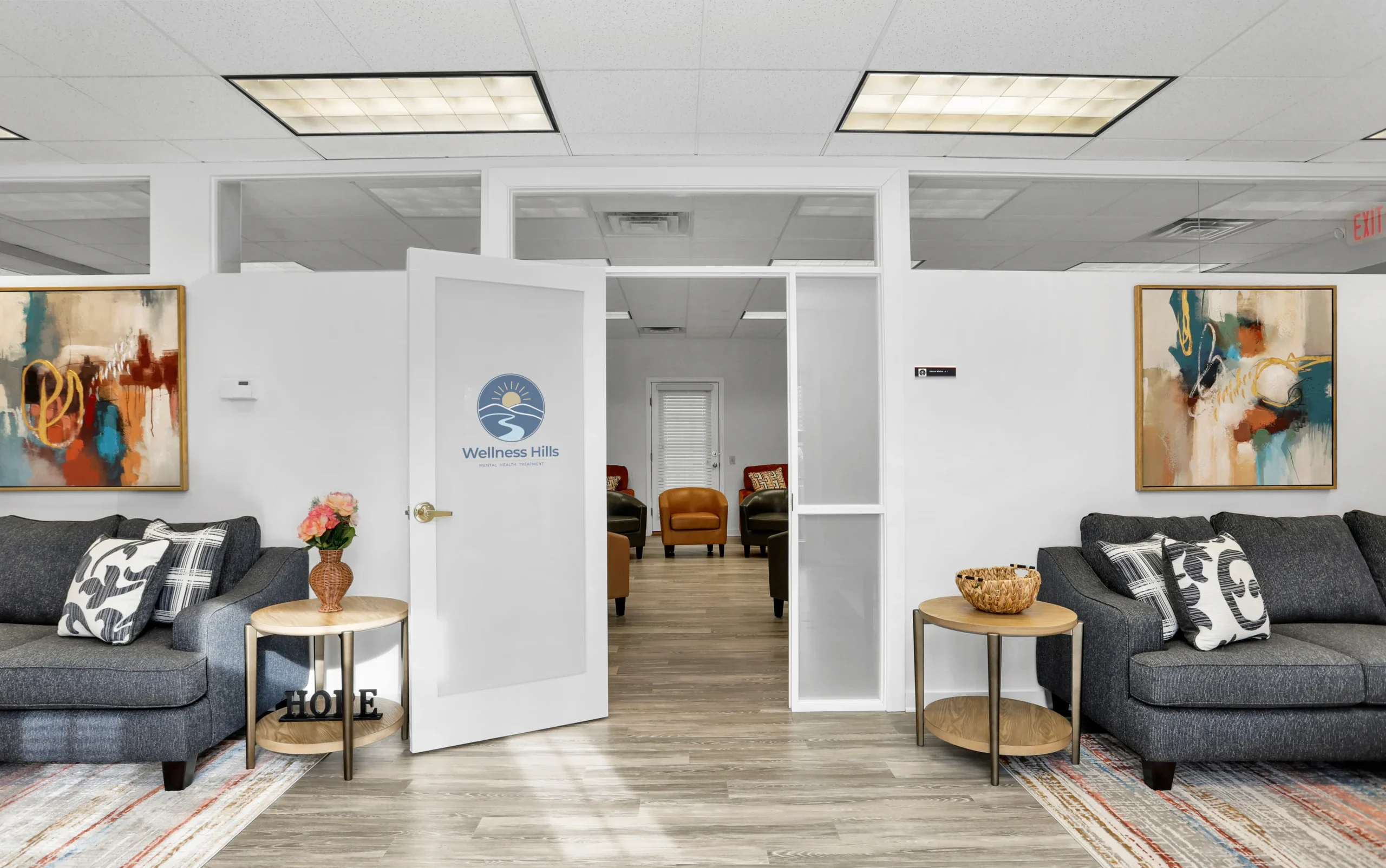
Entrance to the group therapy room at Wellness Hills Mental Health Treatment with couches, artwork, and open door leading to seating area.
Smiling female therapist standing in an office with arms crossed

Clinical Oversight

Family Therapy in NJ at Wellness Hills Mental Health

Family therapy at Wellness Hills is led by New Jersey licensed therapists, including those holding LPC or LAC credentials, under the clinical oversight of Leigh Rasmussen, LPC, LCADC, our Program Director.

When medication management is part of the plan, coordination occurs with Paula Weisman, PMHNP-BC. Care coordination support, including family involvement planning, is facilitated by our primary therapists.

Wellness Hills adheres to evidence-based quality and safety standards established by The Joint Commission (TJC), and we follow applicable federal and New Jersey state regulations and apply evidence-based standards to our clinical and safety procedures.

How Progress is Tracked and Measured

To make sure you are actually getting better, we use a method called measurement-based care. We don’t just guess how you’re doing, we track it with real numbers. For example, if a client with depression and anxiety is undergoing family therapy:

  • For the client, we may use two quick checklists. One tracks depression (called the PHQ-9), and the other tracks feelings of anxiety (called the GAD-7).
  • For their family, we may look at the goals we set on day one. We check whether things are improving in your daily life, such as having fewer arguments, following safety rules at home, or using a better plan for talking to each other.

If these scores show that things aren’t changing or are staying the same, our team will quickly change your treatment plan. This ensures that the work we do in our sessions leads to real, noticeable improvements in how your family gets along every day.

Scheduling & Next Steps

Start Family Therapy at Wellness Hills

Whether you’re stepping into family therapy for the first time or you need a structured step-down into family therapy PHP, family therapy IOP, or outpatient family therapy, your next move starts with a call. Our Director of Admissions, Rachael La Ponte, and her team are ready to guide your care coordination. They’ll listen, map out your options, and help build a plan that fits.

What to Bring and How Scheduling Works

Mindset:

More important than physical items are a few key attitudes to bring:

  • An Open Mind: Be prepared to listen to other family members’ perspectives and understand where they are coming from, even if you don’t agree with them.
  • Willingness to be honest and vulnerable
  • Patience
  • Commitment to the Process

Logistical Items:

  • Identification (A government-issued photo ID)
  • Insurance Information (your insurance card and any relevant coverage details). If another medical professional referred you, bring that documentation.
  • Forms: The therapist may ask you to fill out registration or intake forms ahead of time; ensure you bring completed copies if instructed.
  • Notebook and Pen
  • Comfort Items: Especially for younger children

Information and Preparation:

  • Notes on Concerns and Goals
  • List of Current Medications (Include all prescriptions, over-the-counter medications, and supplements, along with dosages)
  • Questions for the Therapist
  • Relevant Documents (Past therapy records, medical history, school feedback, or legal documents)

What to Expect in the First Family Therapy Appointment

In the first family session, we focus on understanding what’s happening at home and setting clear goals for treatment.

  • Review of goals and concerns
  • Family history and routines
  • Communication patterns
  • Safety considerations
  • Expectations for sessions

Next Steps After Intake

After intake, the team recommends the appropriate level of care and coordinates therapy, psychiatry, and family involvement into one integrated plan.

If you are in crisis, call 911 or text 988 immediately.

Facility Credential: Wellness Hills Mental Health Treatment is licensed by the New Jersey Department of Health (License No. 70290104).

Wellness Hills mental health group therapy room with arranged chairs and comfortable seating.

Common Questions

Frequently Asked Questions About Family Therapy

These FAQs cover the family therapy questions we most often hear from parents, partners, and loved ones during admissions calls and early sessions.

How many family sessions are typical in PHP or IOP?

In both PHP and IOP, family sessions typically occur once per week for about 1 hour, though some programs may schedule them monthly or as needed, depending on the individual’s progress.

Participants usually include anyone the client considers significant to their recovery. This commonly includes the nuclear family and the extended & elected family.

Treatment can continue. Clinicians help adjust plans and focus on available supports.

Yes, when clinically appropriate and with consent.

HIPAA guidelines apply. Shared and private information boundaries are explained clearly at the start, addressing confidentiality in family therapy concerns.

Telehealth options may be available depending on program structure and clinical appropriateness.

988 Suicide & Crisis Lifeline | 988 LifelineOfficial U.S. crisis hotline site.

American Psychological Association (APA) | APA PsycNet Record: Structural family therapy (Colapinto, 2019) – Bibliographic record for a handbook chapter outlining Structural Family Therapy concepts.

National Library of Medicine | PubMed: Differentiation of self: A scoping review of Bowen Family Systems Theory’s core construct (Clinical Psychology Review, 2022) – Scoping review summarizing evidence on differentiation of self in Bowen family systems theory and links to psychological health/relationship outcomes.


We're Here When You Need It Most

Start Your Path To Wellness Today